Refurbished vs Pre-Owned Phones: Which Gives You the Best Bang for Your Buck?
So you’ve decided you’re not paying full price for a brand-new phone. Smart move. But now you’re staring at two options refurbished vs pre-owned phones and honestly, they sound like the same thing. They’re not. And choosing the wrong one could cost you more than just money. It could cost you time, headaches, and a phone that dies in three months.
This guide breaks it down in plain language. No jargon. No sales pitch. Just real talk about what these two categories actually mean, where people go wrong, and how to walk away with a phone that actually works for you.
Refurbished vs Pre-Owned Phones: They Sound the Same But They're Not
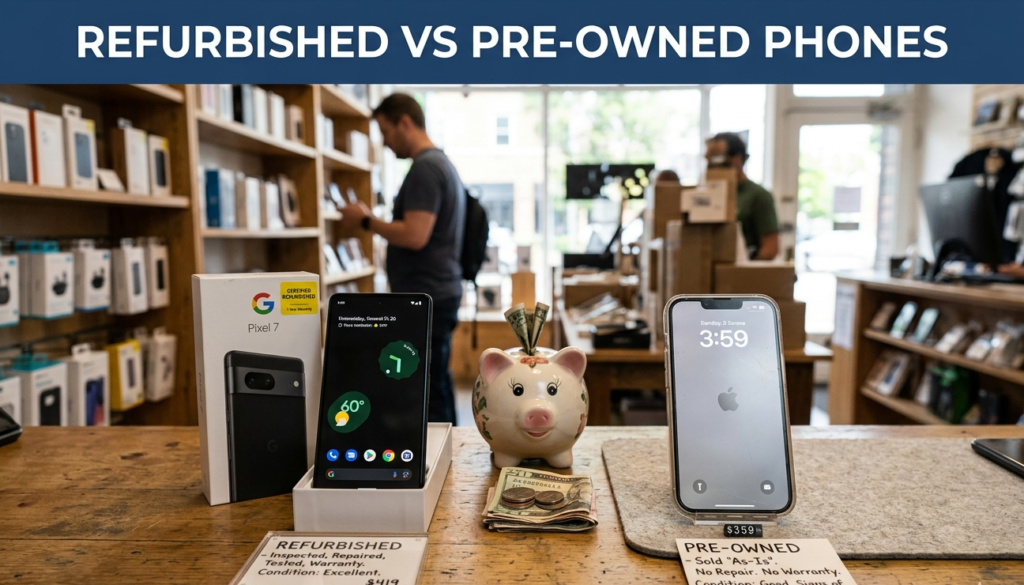
Let’s clear the air first. A pre-owned phone is simply a used phone. Someone bought it, used it for a while, and sold it. That’s it. There’s no process. No inspection. No guarantee the battery isn’t at 40% health or that there’s no invisible crack under the screen protector. It’s sold as-is, and the price reflects that.
A refurbished phone is a different story. Whether it went through a manufacturer’s process or a third-party phone repair shop, it’s been tested, faulty parts replaced, and certified to work at a certain standard. Some refurbished phones come back looking factory fresh. Others have minor cosmetic marks but perform perfectly.
The confusion kicks in because some sellers throw the word ‘refurbished’ around loosely. That’s why knowing who did the refurbishing matters more than the label itself.
What Actually Happens When a Phone Gets Refurbished?
This is the part most buyers never think about and it’s where the real value hides. When a phone lands at a legitimate mobile phone fix repair centre or manufacturer refurbishment facility, it goes through a specific checklist. The technicians test the screen, battery health, charging port, cameras, speakers, microphone, buttons, and software. If something’s off, it gets replaced with either an OEM part or a quality equivalent.
Battery replacement is the big one. A used phone could have a battery sitting at 68% maximum capacity and the seller might not even disclose it. A properly refurbished phone should have a battery replacement if it’s below a certain threshold, usually around 80% or higher, depending on the grading standard. After the repairs, the phone gets wiped, the software gets restored, and it gets graded usually A, B, or C based on cosmetic condition. Grade A looks practically new. Grade C might have visible scratches but runs perfectly.
Not All Refurbishers Are Created Equal
Here’s something competitors rarely talk about the quality of a refurbished phone is only as good as the shop or facility that worked on it. A local phone repair shop that rushes through a device to flip it quickly is not the same as a certified repair centre following manufacturer guidelines.
Before you buy, ask: Who refurbished this? What parts were replaced? Is there a warranty? A legit seller will answer all three without hesitation.

The Real Price Difference When You Buy and Sale Phones
People tend to chase the cheapest option without doing the actual maths. Here’s how it plays out in real life. Say you’re looking at a specific phone model. A pre-owned one from a private seller might be ₹2,000 cheaper than a certified refurbished version from a trusted buy and sale phones platform. Looks like a no-brainer, right? But here’s what that saving might cost you: a new battery (₹1,500-₹2,500), a screen repair if there’s a dead spot you didn’t notice (₹2,000+), and the time wasted going back to a mobile phone fix repair shop within the first two months. Suddenly the ‘cheaper’ phone costs more.
Refurbished phones from verified sellers tend to come with a 6 to 12-month warranty. That buffer alone is worth paying slightly more for, especially if you’re buying for a family member or someone who can’t afford downtime without a working phone.
Where People Get Burned Buying Pre-Owned Phones
There’s a reason so many people end up regretting pre-owned purchases. It’s not always about bad sellers, sometimes it’s just the nature of buying without any safety net.
The Battery Problem Nobody Warns You About
Battery degradation is invisible until it isn’t. A phone can feel completely normal for the first two weeks and then start dying at 30% charge. This is hands-down the most common complaint from people who buy pre-owned phones. Unless you check the battery health before buying (and know how to find it in the settings), you’re rolling dice.
iCloud and Google Account Locks
This one catches a surprising number of buyers off guard. A pre-owned phone can be fully functional and still be locked to a previous owner’s Apple ID or Google account. If the seller didn’t properly sign out before selling, you could end up with a phone you can’t fully use. Refurbished phones from proper channels are always verified clean of activation locks before being listed.
Hidden Water Damage
Internal water damage doesn’t always show up immediately. A phone that got splashed six months ago might work fine today and start showing screen glitches or charging issues two months after you buy it. A proper refurbishment process includes checking the internal moisture indicators. A private pre-owned sale? Usually not.
When Pre-Owned Makes More Sense Than Refurbished Phones
To be fair pre-owned isn’t always the wrong choice. There are situations where it genuinely works out. If you’re buying from someone you personally know and trust, you can ask questions and physically inspect the phone before handing over money. That personal accountability changes the risk equation completely.
Pre-owned also makes sense if you’re buying an older model as a backup phone or for a short-term need. If the phone lasts 8 months instead of 2 years, that’s still fine for the price you paid. The risk goes up when it’s your daily driver or your child’s primary device. In those cases, refurbished phones with a warranty are the smarter call.
What to Look for When Buying Refurbished Phones
Not every listing that says ‘refurbished’ deserves that label. Here’s what separates a genuine refurbished phone from one that’s just been wiped and relisted. First, look for grading transparency. A seller who clearly explains what Grade A, B, and C means and shows you photos matching those grades is being honest. Vague listings with stock photos are a flag.
Second, check what’s been replaced. Battery replacement, screen replacement, and port repairs should all be disclosed. If a seller can’t tell you what was fixed, they either don’t know or don’t want you to know. Third, warranty length matters. Six months minimum is a reasonable expectation from any credible buy and sale phones platform or phone repair shop offering refurbished devices. Less than that and you’re basically buying as-is.
Fourth and this one’s underrated check return policy. Can you return the phone within 7 to 14 days if something isn’t right? A seller confident in their product should offer this without argument.
Refurbished vs Pre-Owned Phones: A Quick Side-by-Side
| Feature | Refurbished | Pre-Owned |
|---|---|---|
| Inspection & Testing | Yes, thorough | Usually none |
| Battery Health | Replaced or verified | Unknown — buyer beware |
| Warranty | Typically 6–12 months | Rarely offered |
| Account Locks Cleared | Yes, always | Not guaranteed |
| Price | Slightly higher upfront | Lower upfront, higher risk |
| Best For | Daily use, gifts, family | Backups, trusted sellers |
Final Verdict: Which One Actually Wins?
In the refurbished vs pre-owned debate, there’s no absolute winner but there is a smarter default. For most people buying a phone they’ll rely on every day, refurbished phones from a reputable seller or certified mobile phone fix repair facility will serve them better. The slightly higher price buys peace of mind, a working battery, and a safety net if something goes wrong.
Pre-owned makes sense when you know who you’re buying from, you’re buying for a non-critical need, or you have the technical knowledge to inspect and assess the phone yourself before committing. Either way don’t just chase the lowest number. Look at what you’re actually getting. The best deal isn’t the cheapest phone. It’s the phone that keeps working six months from now without costing you another trip to the repair shop.
Grande Prairie:
Unit 104 10006 101 Ave Grande Prairie Alberta T8V 0Y1
Phone: +1(780) 538-4555
Store Timings:
Mon-Fri 10am – 6pm
Sat 11am – 5pm
Dawson Creek:
10222 10 St, Dawson Creek, BC V1G 3T4, Canada
Phone: +1(778) 691-9171
Store Timings:
Mon-Fri 10am-5pm
Sat 12pm – 5pm
Fort St John:
8111,100 Ave Unit 202C, Fort St John, BC V1J1W4, Canada
Phone: +1(250) 782-0090
Store Timings:
Mon-Fri 10am-5pm
Sat 12pm – 5pm