
How to Tell If Your Phone Repair Shop Is Actually Good (Use This Checklist)
So your phone screen just cracked, or maybe it fell in water and now it’s acting strange. Whatever happens, you need it fixed & fast. The problem? Not every phone repair shop out there is worth your time or money. Some are great. Some will make things worse. And if you’ve ever walked out of a repair shop with a phone that broke again two weeks later, you already know what I mean.
This guide is for anyone in Canada who wants to make sure they’re handing their phone to someone who actually knows what they’re doing. Use this checklist before you commit to anything.
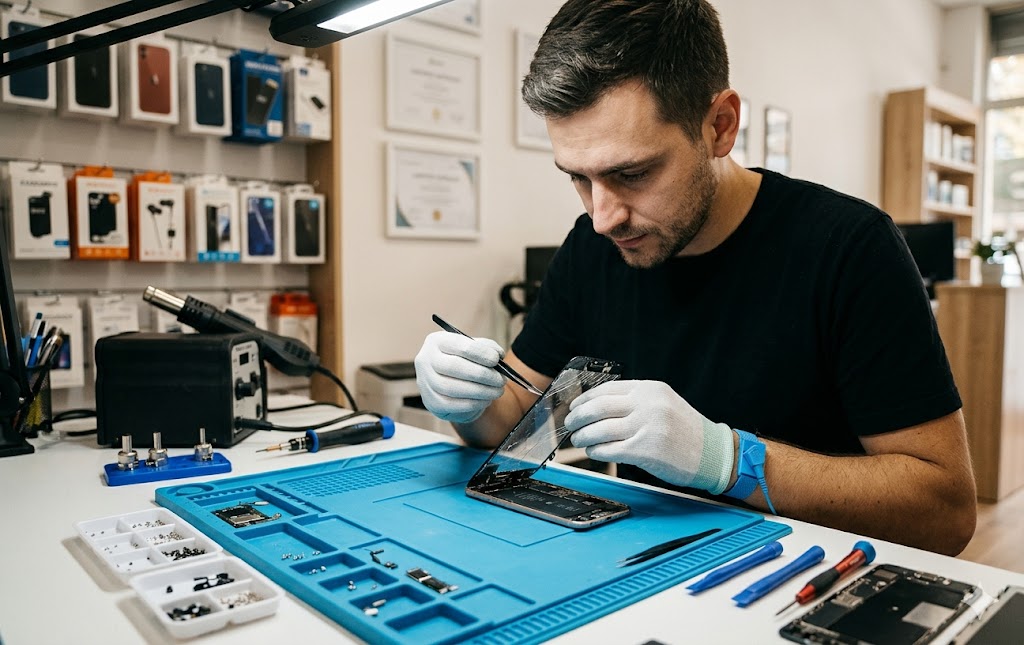
1. The Phone Repair Shop Should Be Transparent About Parts
This is the first thing to check, and it’s a big one. When you walk into a phone repair shop or call them up, ask directly: “Do you use original parts or aftermarket?”
A good shop won’t dodge that question. They’ll tell you exactly what they use and explain the difference. For example, original manufacturer parts (also called OEM parts) are generally more reliable but cost more. Aftermarket parts can work fine, but quality varies a lot.
If someone gets vague or defensive when you ask, that’s a red flag. You deserve to know what’s going into your device. Shops that fix phones properly are always upfront about this, no excuses.
2. Check If the Phone Repair Shop Offers a Warranty
Any reputable phone repair shop will back their work with some kind of warranty. Doesn’t have to be a lifetime guarantee, but 30 to 90 days is standard for most repairs. Some better shops offer up to a year of parts and labour.
If a shop says “no warranty” or starts making excuses, keep walking. A warranty tells you they’re confident in their work. It also protects you if something goes wrong after you pick up your phone.
Ask specifically: “What does your warranty cover?” It should cover defective parts and workmanship, not just one or the other.
3. Look at Online Reviews (But Know How to Read Them)
Any reputable phone repair shop will back their work with some kind of warranty. Doesn’t have to be a lifetime guarantee, but 30 to 90 days is standard for most repairs. Some better shops offer up to a year of parts and labour.
If a shop says “no warranty” or starts making excuses, keep walking. A warranty tells you they’re confident in their work. It also protects you if something goes wrong after you pick up your phone.
Ask specifically: “What does your warranty cover?” It should cover defective parts and workmanship, not just one or the other.

4. A Good Phone Repair Shop Will Give You a Quote Before Touching Anything
This one matters more than people realize. Before any work begins, a trustworthy mobile phone repair shop will give you a written or verbal quote and they won’t start until you agree to it.
Some sketchy places will take your phone, open it up, and then hit you with a surprise charge. Or they’ll say the repair is more expensive than quoted because of “extra damage they found.” That can sometimes be legitimate, but a good shop will call you before proceeding if costs change.
Always ask: “Can you give me a quote before you start?” If they say yes and follow through, good sign. If they push back or start right away without your go-ahead, be cautious.
5. Notice How the Staff Communicates With You
This one’s easy to overlook, but it tells you a lot. When you walk in or call a phone repair shop, how are you treated?
Good technicians explain things in plain language. They don’t make you feel dumb for not knowing the difference between a charging port and a battery issue. They answer your questions without rushing you.
If staff seem annoyed by basic questions, can’t explain what they’re doing, or give you different answers every time you call, that’s a sign of disorganization and possibly poor quality work.

6. Ask About Turnaround Time and Whether It's Realistic
A cracked screen repair should typically take 30 to 60 minutes for most popular phones. Battery replacement? Similar timeframe. Water damage diagnostics take longer usually a few hours to a day.
Be wary of shops that promise ridiculously fast turnarounds on complex repairs just to win your business. And equally wary of ones that keep pushing back your pickup date without explanation.
Ask them: “How long will this take and what could change that?” A shop that repairs mobile phones regularly will have a realistic, clear answer.
7. The Shop Should Have Experience With Your Phone Brand
Not every technician is equally comfortable with every brand. iPhones, Samsung Galaxy, Google Pixel, and OnePlus all have different quirks. Some repairs require brand-specific tools or software.
Ask the shop if they’ve worked on your specific model before. If your phone is a newer release, ask how familiar they are with it. A shop that handles mobile phone fix repair on all major brands will usually say yes confidently or be honest if they haven’t handled your exact model much.
8. Look for Cleanliness and Proper Tools
When you drop off your phone, take a quick look around. Is the workspace organized? Do they have proper tools and equipment visible? A clean, organized shop usually reflects how carefully they handle your device.
A shop working out of a cluttered back table with mismatched screwdrivers is not the same as one with proper ESD-safe mats, precision tools, and organized storage.
This isn’t about looks, it’s about whether they take the job seriously.
9. Check If They Do Diagnostics Before Quoting (Especially for Water Damage)
For repairs involving water damage, software issues, or anything unclear, a good phone shop that fix phones will run a diagnostic first often free or for a small fee before giving you a final quote.
This is actually the responsible approach. It’s how a good technician avoids misdiagnosing the problem and charging you for the wrong repair.
Quick Checklist Summary
Okay, before you hand over your phone, just run through these real quick. It literally takes two minutes and can save you a headache later.
- Are they open about what parts they’re using?
- Do they have a warranty on the repair, not just a vague “we’ll see” but an actual timeframe?
- Have you checked their reviews and do those reviews actually say something useful, not just “great service!”?
- Did they give you a price before starting, or did they just grab your phone and disappear into the back?
- Does talking to them feel easy, or do you feel like you’re bothering them?
- Is the time they quoted you realistic, or does it feel like they’re just telling you what you want to hear?
- Have they fixed your phone brand before like your specific model, not just “yeah we do phones”?
- Does the place look like someone actually takes pride in working there?
- And for anything complicated like water damage, are they willing to run a diagnostic first?
If most of those are checking out, you’re probably in good hands. Not every shop will be perfect across the board, but the good ones will hit most of these without you even having to push hard for answers.
Frequently Asked Questions (FAQ)
How do I know if a phone repair shop is actually trustworthy?
Honestly, a lot of it comes down to how they talk to you. Do they explain things clearly? Do they give you a price upfront? Are they cool with you asking questions, or do they seem annoyed? Good shops don’t mind being asked if they expect it. Pair that with decent reviews that have real detail in them, and you’re usually safe.
Should I just go to the manufacturer instead of a local shop?
For most common repairs, a local shop is going to be quicker and easier on your wallet. Manufacturer repairs or going through your carrier can drag on for days or even weeks, and the cost is often higher. A solid local shop that uses good parts and stands behind their work is usually the better call just do a bit of homework before you go.
What exactly should a repair warranty cover?
Both the part they put in and the work they did. So if your screen starts acting up again two weeks after a replacement and it’s clearly a parts or installation issue, they should fix it without charging you again. If a shop only covers one or the other, ask why.
How long should I realistically wait for my phone to be fixed?
A screen swap or battery replacement on a common model? Usually done within the hour. Anything involving water damage or something internal is a different story that can take a day or two, sometimes longer depending on what they find. If a shop is quoting you for three days for a basic screen repair, that’s worth questioning.
What should I actually ask when I walk in?
Keep it simple: What parts are you using? How long will it take? What’s the cost, and will you call me if that changes? Is there a warranty? These four or five questions will tell you pretty fast whether you’re dealing with a shop that knows what they’re doing or one that’s just winging it.
Are aftermarket parts actually a problem?
Not automatically. There are aftermarket suppliers out there making really decent parts, and plenty of repair shops use them without any issues. The difference is a good shop will tell you that’s what they’re using and explain the trade-off. It’s when a shop gets cagey about it or acts like the question doesn’t matter that’s when you should be a bit cautious.
Is there a chance the shop could actually damage my phone more?
It happens, yeah usually at shops that are cutting corners or don’t have enough experience with your specific device. That’s not to scare you off local repairs, because most are fine. But it’s exactly why checking reviews, asking about experience with your model, and making sure there’s a warranty matters. It’s your protection if something does go sideways.

Grande Prairie:
Unit 104 10006 101 Ave Grande Prairie Alberta T8V 0Y1
Phone: +1(780) 538-4555
Store Timings:
Mon-Fri 10am – 6pm
Sat 11am – 5pm
Dawson Creek:
10222 10 St, Dawson Creek, BC V1G 3T4, Canada
Phone: +1(778) 691-9171
Store Timings:
Mon-Fri 10am-5pm
Sat 12pm – 5pm
Fort St John:
8111,100 Ave Unit 202C, Fort St John, BC V1J1W4, Canada
Phone: +1(250) 782-0090
Store Timings:
Mon-Fri 10am-5pm
Sat 12pm – 5pm